How to make sushi at home in Nairobi: a beginner's guide for International Sushi Day
L
Leisure Collective
Author
241
0
0
International Sushi Day is the perfect excuse to roll your own. Here's the beginner's guide to making sushi at home in Nairobi — ingredients, where to buy and how-to.
How to make sushi at home in Nairobi: a beginner's guide for International Sushi Day
There is a particular satisfaction in making something at home that you usually only order. Sushi has that quality more than most foods — it looks technical, feels precise and carries a certain mystique that keeps people firmly on the ordering side of the menu. International Sushi Day, marked every year on 18 June, is as good an occasion as any to change that.
The good news: making sushi at home does not require a culinary degree, a trip to Tokyo or a kitchen full of specialist equipment. It requires four or five ingredients, a bamboo mat, a bit of patience and a willingness to accept that your first roll will not look like the ones in the photos. That is fine. It will still taste like sushi.
A little history first
Sushi's story is longer and stranger than most people realise. Its earliest ancestor was a preservation method — fish packed in fermented rice for months at a time, eaten once the fermentation had done its work, with the rice itself often discarded. This practice travelled from parts of Southeast Asia into Japan, where it slowly transformed over centuries.
By the early 1800s, in the bustling city then known as Edo — now Tokyo — a faster, fresher style of sushi emerged. Vinegared rice paired with a slice of fish, served as a quick, satisfying bite rather than a preserved staple. This is the direct ancestor of the nigiri and maki most people recognise today. What started as Edo street food eventually became one of the most recognisable culinary traditions in the world — refined, elevated and, eventually, exported globally.
International Sushi Day itself is a relatively recent addition to the food calendar — a social media-driven celebration that began in 2009 and has since grown into an informal but widely observed occasion for sushi lovers everywhere.
What you actually need
The ingredient list for basic sushi is shorter than most people expect. Here is what goes into a simple beginner roll:
Sushi rice — short-grain Japanese rice, sometimes labelled "sushi rice" or "Japanese rice." This is non-negotiable; long-grain or basmati rice will not hold together properly.
Rice vinegar — seasons the cooked rice and gives sushi its characteristic tang. A small bottle goes a long way.
Nori sheets — the dried seaweed used to wrap maki rolls. Sold in resealable packs.
Sugar and salt — combined with the rice vinegar to season the rice.
Fillings — for a beginner roll, the most forgiving and widely available options are cucumber, avocado, carrot and cooked prawns or crab sticks. Raw fish is best left until you are more confident, and requires sourcing genuinely fresh, sashimi-grade fish — which is a separate conversation entirely.
A bamboo rolling mat (makisu) — inexpensive and the single piece of equipment that makes rolling significantly easier.
Soy sauce, pickled ginger and wasabi — for serving.
Where to find these ingredients in Nairobi
Sourcing sushi ingredients in Nairobi has become considerably easier over the past few years, as the city's larger supermarkets have expanded their international and Asian food sections.
Sushi rice and rice vinegar are increasingly available in the imported and Asian foods aisles of Nairobi's larger supermarket branches — particularly those in Westlands, Kilimani and Lavington, where demand for international ingredients is highest. If your local branch does not stock it, asking the in-store team whether they can order it in is often worth the conversation — many larger branches do special orders for ingredients with consistent demand.
Nori sheets can sometimes be trickier to find in general supermarkets, but turn up reliably in shops specialising in Asian groceries — there are a small but growing number of these across Nairobi, often run by members of the city's Korean, Chinese and Japanese communities, and worth seeking out for nori, sushi rice, rice vinegar, wasabi paste and pickled ginger all in one visit.
For the freshest fillings — cucumber, avocado, carrots — your usual greengrocer or local market will outperform any supermarket on quality and price. Nairobi's avocados, in particular, need no introduction.
If you strike out locally, several online grocery delivery platforms operating in Nairobi now stock specialty and imported goods, including sushi-making essentials — worth checking before assuming an ingredient is unavailable.
How to make sushi rice
This is the step that determines whether your sushi tastes right — and it is also the step most beginners rush.
Ingredients (makes enough for 4–6 rolls): 2 cups sushi rice 2 ¼ cups water 4 tablespoons rice vinegar 2 tablespoons sugar 1 teaspoon salt
Method: Rinse the rice thoroughly in cold water until the water runs clear — this removes excess starch and prevents the rice from becoming gummy. This usually takes 4 to 5 rinses.
Drain the rice and let it sit for 20 to 30 minutes before cooking.
Cook the rice with the water in a pot with a tight lid, or in a rice cooker if you have one. Bring to a boil, then reduce to the lowest heat and cover for about 15 minutes, until the water is fully absorbed. Remove from heat and let it sit, covered, for another 10 minutes.
While the rice cooks, gently warm the rice vinegar, sugar and salt in a small pan until the sugar and salt dissolve completely. Let this mixture cool.
Transfer the cooked rice to a wide, non-metallic bowl. Pour the vinegar mixture over the rice and fold it through gently with a wooden spoon or spatula — using a slicing, folding motion rather than stirring, which can crush the grains.
Let the rice cool to room temperature before using it. Do not refrigerate it — this changes the texture significantly.
How to roll: the basic maki technique
Once your rice is ready, rolling is largely about confidence and a light touch.
Place a sheet of nori, shiny side down, on your bamboo mat — rough side facing up, this is the side that will hold the rice.
With damp hands (this prevents the rice from sticking to your fingers), spread a thin, even layer of rice over the nori, leaving a small border free at the top edge. The layer should be thin — more rice is not better here.
Arrange your fillings in a line across the rice, about a third of the way up from the edge closest to you.
Using the mat, begin rolling from the edge nearest you, applying gentle but firm pressure as you go, tucking the fillings in as you roll. Use the bare strip of nori at the top edge to seal the roll once it is fully wrapped.
Press gently along the length of the roll to firm it up, then use a sharp knife — dampened slightly to prevent sticking — to slice it into even pieces.
Your first roll will likely be imperfect. The rice might be slightly too thick in places, the roll might not be perfectly even, and that is completely normal. The second and third rolls improve quickly — sushi rolling is one of those skills where the learning curve is steep but short.
Simple filling combinations to start with
The classic cucumber roll (kappa maki): Thin strips of cucumber, nothing else. The simplest possible roll and a good way to practise technique without worrying about multiple ingredients.
The California-inspired roll: Avocado, cucumber and crab sticks or cooked prawns. Creamy, fresh and forgiving — this is the roll most beginners find most satisfying to both make and eat.
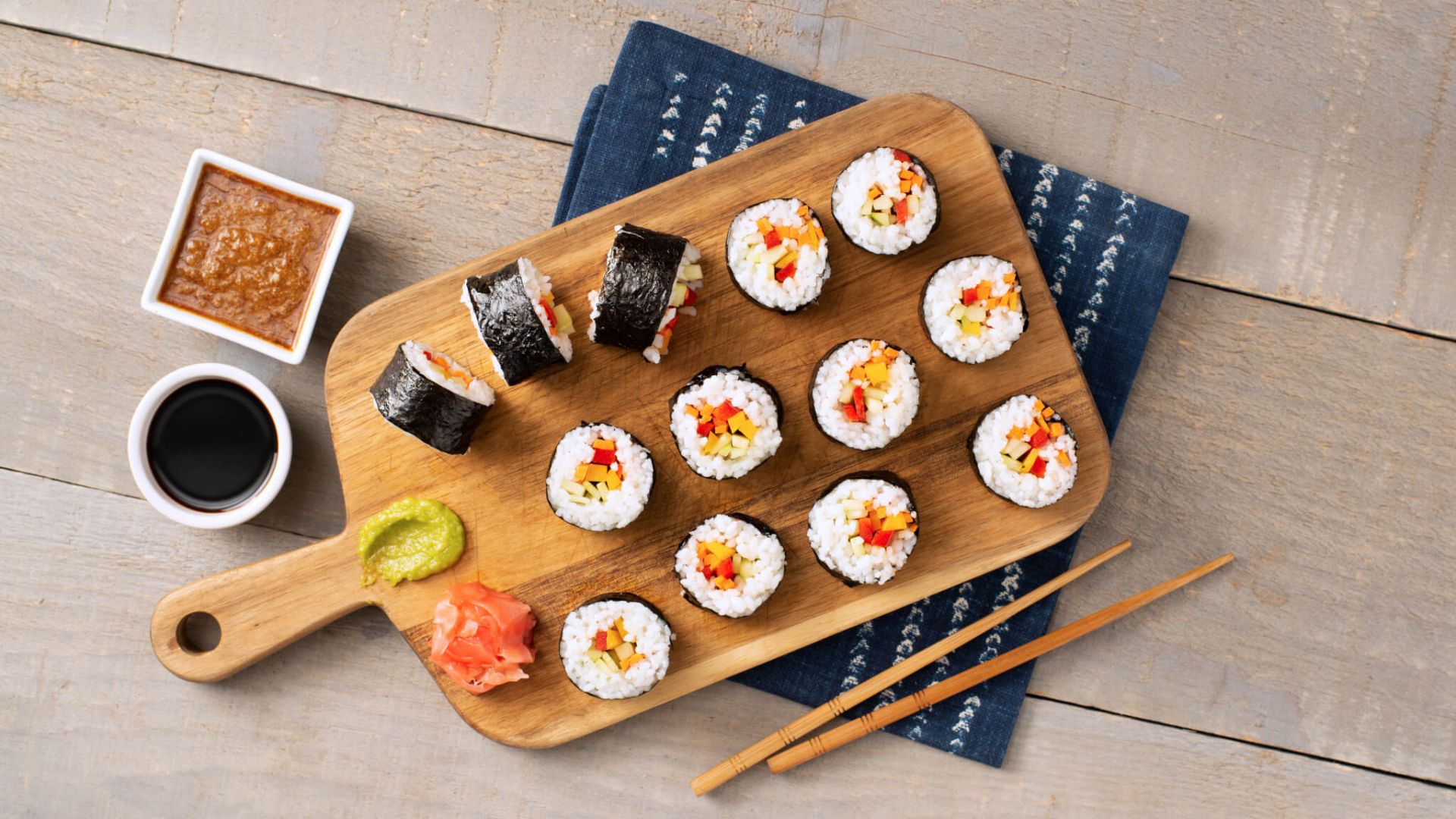
The vegetable roll: A combination of carrot, avocado, cucumber and a few leaves of fresh spinach or lettuce. Bright, crunchy and entirely plant-based.
Serve with soy sauce for dipping, a small mound of pickled ginger on the side, and a touch of wasabi if you like the heat — though go gently with wasabi until you know your tolerance.
If cooking is not for you today
Making sushi at home is genuinely rewarding, but it is also a project — one best suited to a relaxed afternoon rather than a quick weeknight dinner. If International Sushi Day arrives and the idea of rolling your own feels like more effort than the occasion calls for, Nairobi's sushi scene has grown considerably and there are excellent options across the city covering everything from Nikkei fusion to traditional omakase experiences, each offering something different depending on what you are in the mood for.
Either way — homemade or ordered — 18 June is worth marking with a plate of sushi.