Nike has finally come home: what the first East African flagship store means for Nairobi
L
Leisure Collective
Author
349
1
0
Nike has opened its first East African flagship store at Sarit Centre, Nairobi — with Eliud Kipchoge at the door. Here's why this moment is bigger than retail.
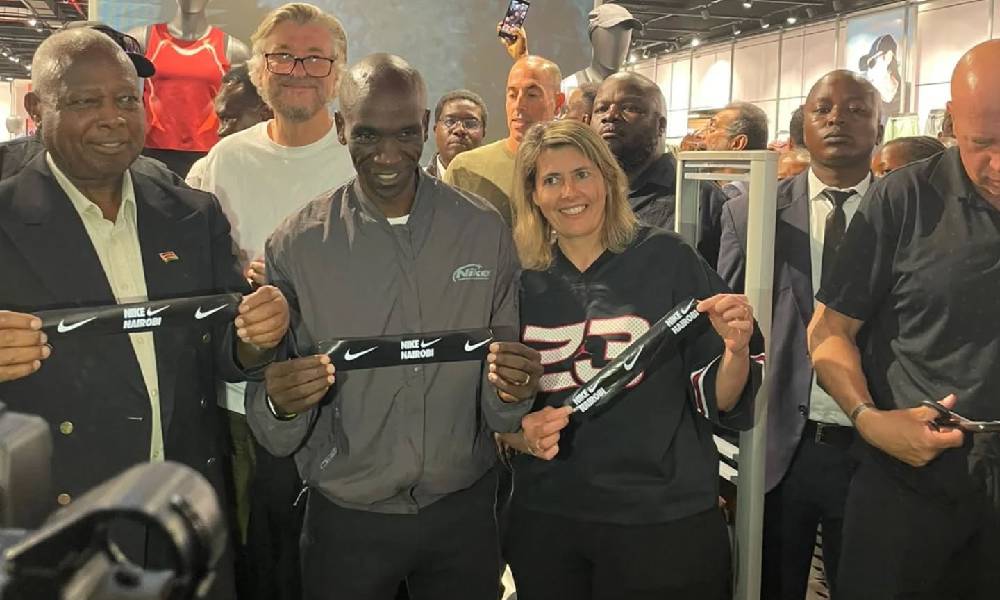
Nike opened its first East African flagship store at Sarit Centre, Nairobi on 6 May 2026.
There is a particular irony at the heart of Nike's story in Kenya. For decades, the country most associated with the brand's most celebrated athletes — its fastest shoes, its boldest performance claims — did not have a single Nike flagship store on its soil. Kenyans who built Nike's running legacy trained in the Rift Valley, broke world records in Nike spikes, and inspired the shoe technology now worn by runners on every continent. The brand came home to collect the trophies. The store came later.
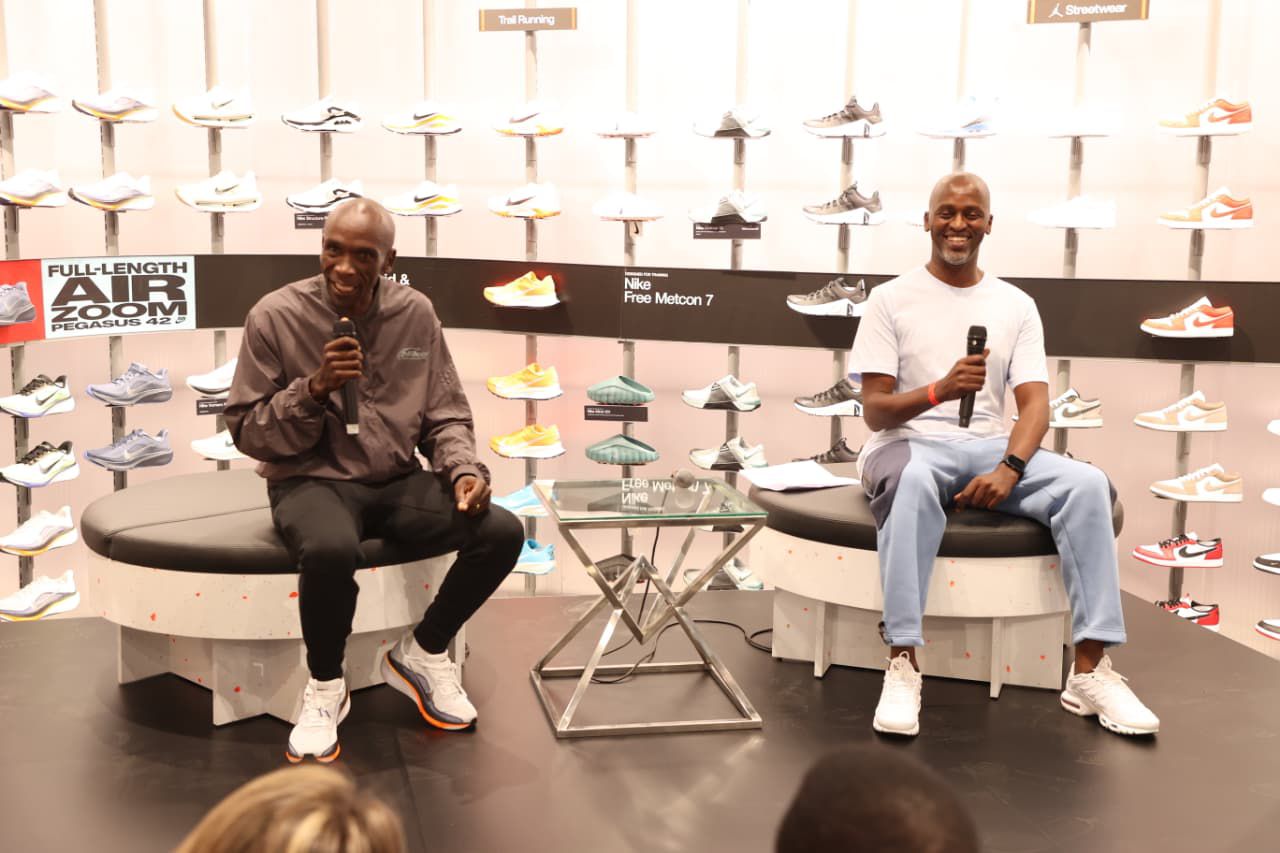
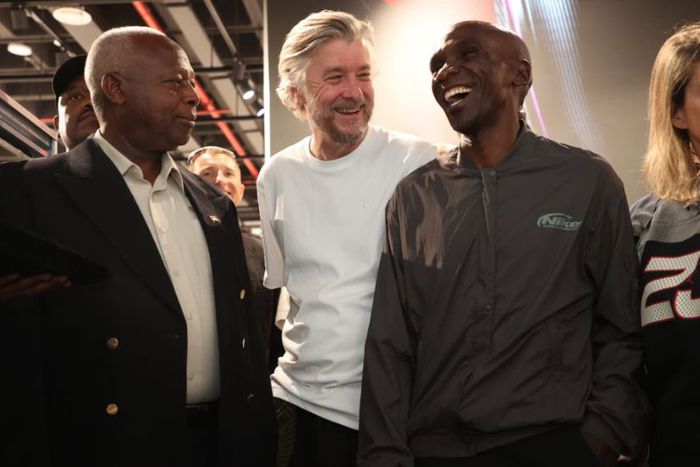
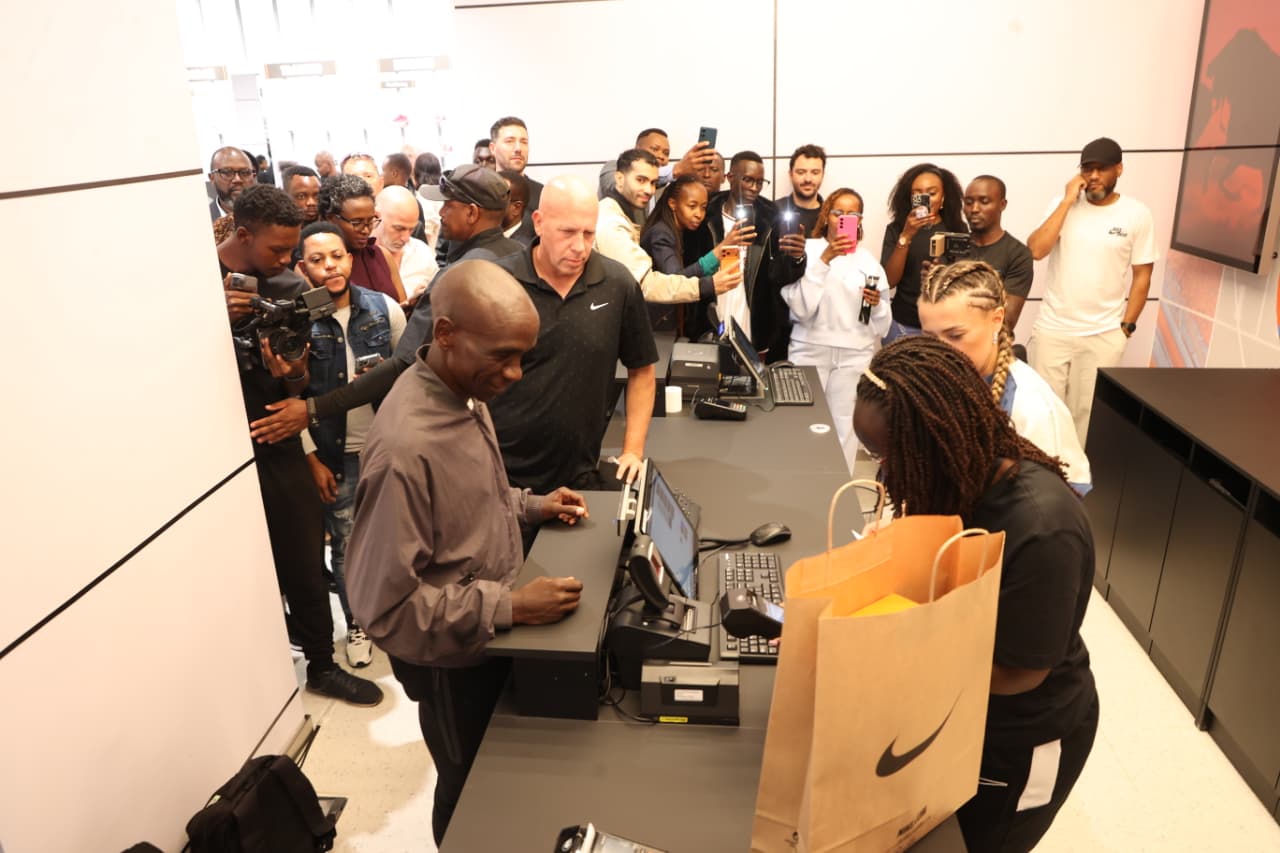
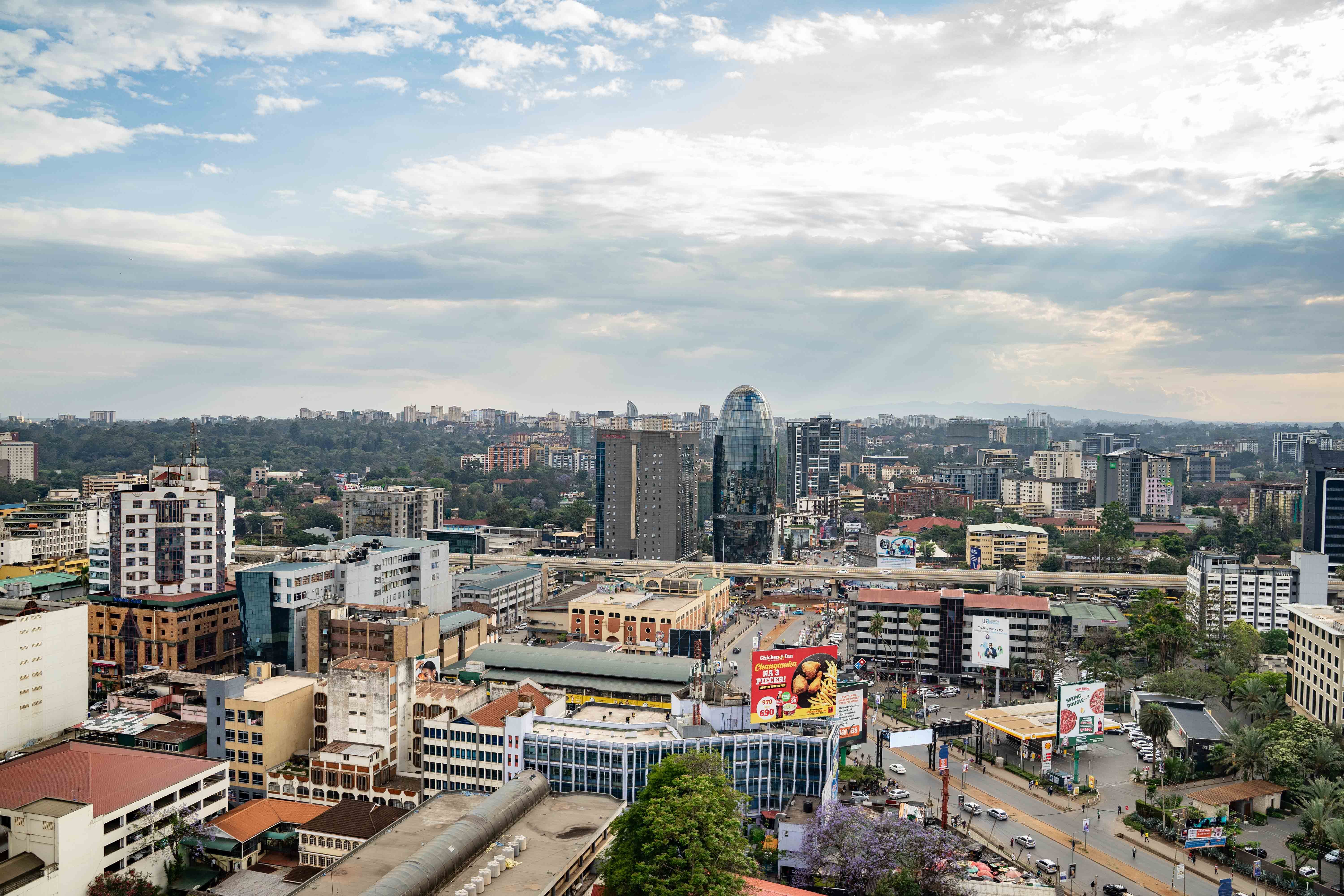
On Wednesday 6 May 2026, that changed. Nike officially opened its first flagship store in Nairobi at Sarit Centre in Westlands — the brand's first in Kenya and the only one in East Africa. And standing at the door to mark the occasion was the man most responsible for making it feel overdue.
Eliud Kipchoge has been associated with Nike since 2003 — the same year he announced himself on the global stage with 5,000m gold at the World Championships in Paris. That is 23 years of partnership, 23 years of world records, two Olympic gold medals and the most famous sub-two-hour marathon in history — all of it achieved in Nike kit, all of it built on the roads and altitude of Kenya.
Kipchoge has not only been the face of the brand on the roads but also a driving force behind its cutting-edge innovation wing for close to 13 years, with his influence pivotal in shaping performance gear that continues to redefine the limits of endurance running. The Alphafly and Vaporfly — the shoes that changed marathon racing — exist in part because of what Kipchoge was willing to test on himself at altitude in Kaptagat.
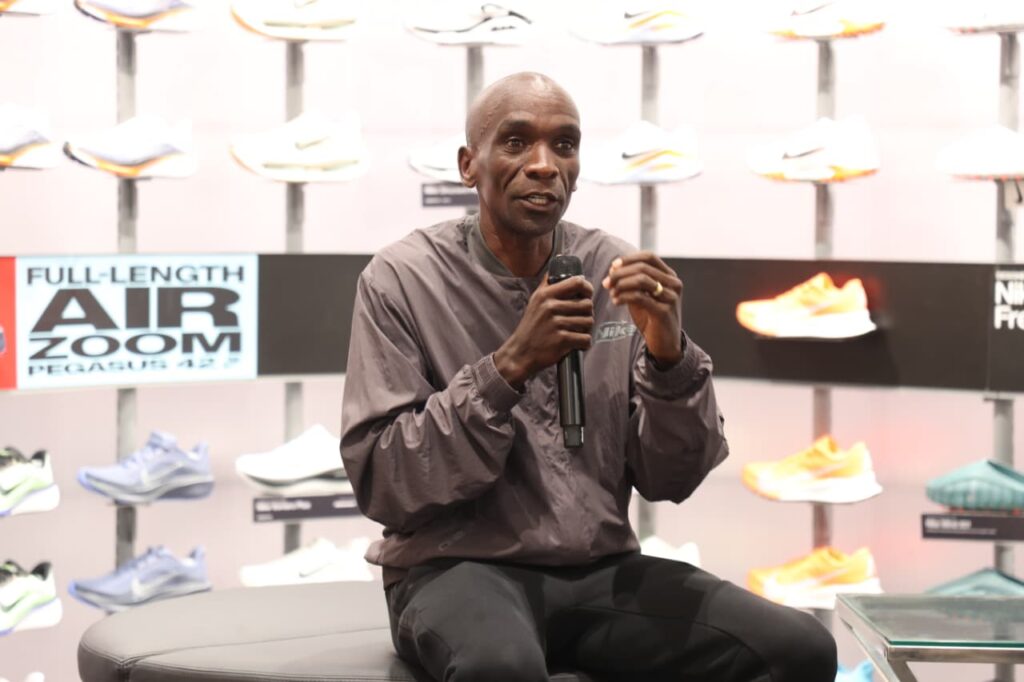
So when he stood at the opening of Sarit Centre's Nike store and said "I've been with Nike for the past 23 years, and this is a massive achievement for the citizens of this country. This is the first shop in East Africa, and it's a huge milestone. I'm a really happy man because I believe I have left a legacy" — it was not brand ambassador language. It was something more personal than that.
Nike Kenya General Manager Kieran Murphy revealed that the company undertook an extensive two-year scouting process before settling on the Sarit Centre location.
"We started looking for a site two years ago. It has taken us that long to find the right location, the right site and the right capacity," he said. That deliberateness is telling. This is not a brand dipping its toe into a new market. It is a considered, long-term commitment.
The launch was led by Hudson Brand Development Kenya, part of Hudson Holdings, Nike's official distributor partner across North and Sub-Saharan Africa. Murphy was clear about the ambition: "In one year, we expect to have three stores. This is just the first step of what we are building here in Kenya."
The timing is not accidental. Nairobi's consumer market has matured significantly. The city now has an audience willing to pay for premium sporting goods — not just performance athletes, but the expanding community of recreational runners, gym-goers, football players and lifestyle consumers for whom Nike represents something aspirational beyond the sport itself.
The store and what it carries
The flagship store carries the latest collections for running, training, football and Jordan, with options for men, women and kids. The Jordan line is a notable inclusion — its presence signals that Nike sees Nairobi not only as a performance market but a streetwear and culture market, which reflects a more sophisticated understanding of how the brand actually lives in the city.
At the heart of the Kenyan offering is the Kipchoge Collection — a signature range that blends cutting-edge innovation with personal storytelling rooted in his Kenyan upbringing and disciplined training approach, with the Alphafly 3 and Vaporfly 4 "EK" racing shoes at its core. Having those shoes available in Nairobi — in a flagship environment where they can be properly understood and fitted — is a meaningful shift for Kenya's competitive running community, which has historically sourced elite gear through informal import channels.
On pricing, Murphy acknowledged the range deliberately: "There are premium products and others that are more affordable — we are widening our range to accommodate different customers."
That accessibility is important. The most powerful thing Nike can do in Kenya is not sell expensive shoes to wealthy consumers. It is make the brand genuinely available to the next generation of athletes who are still training on dirt roads and dreaming of doing what Kipchoge did.
The bigger picture: Kenya's sport economy coming of age
Nike's arrival is one data point in a broader story about Kenya's sporting and consumer economy reaching a new inflection point. Kenya's tourism sector brought in KES 452 billion in 2024, up from KES 377 billion in 2023 — but sports tourism continues to lag despite Kenya's global dominance in athletics. The infrastructure around sport — retail, events, hospitality, media — has not kept pace with the athletic talent the country produces.
That is beginning to change. The Nairobi City Marathon drew more than 15,000 runners from over 70 countries in 2025, using the Nairobi Expressway as its course — with ambitions to eventually join the Abbott World Marathon Majors.
Kipchoge himself gave voice to that ambition at the store opening: "I'm praying that we have a World Major Marathon in Africa — that will also be a legacy. That's what the sport is all about."
A Nike flagship store, a growing marathon calendar, a running culture that stretches from elite training camps in Iten to weekend fun runs on the Southern Bypass — these things are connected. Nike did not come to Kenya to sell shoes to people who already love the brand. It came because the ecosystem is finally building fast enough to sustain what comes next.
Where to find it
Nike's first East African flagship store is now open at Sarit Centre, Westlands, Nairobi. Follow @nikenairobi on Instagram for store updates, events and new arrivals.