Your Phone Is Dysregulating Your Nervous System. Here's What That Actually Means.
L
Leisure Collective
Author
221
0
0
You are not just tired. Your nervous system is stuck in a low-grade emergency state — and your phone is a significant reason why. Here is what is happening in your body every time you scroll and what you can do about it without spending anything.
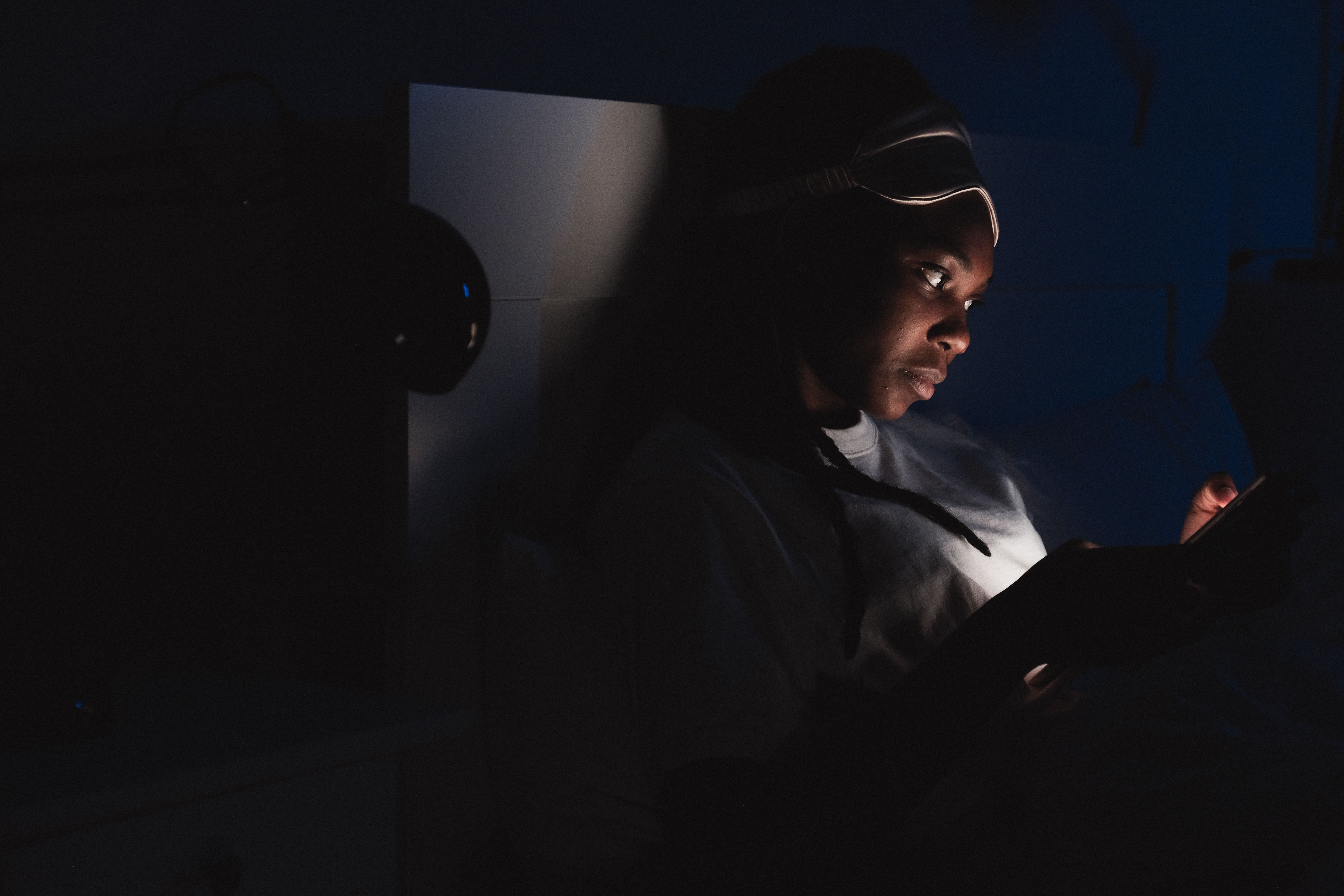
It is 11pm in Nairobi. You are in bed. You told yourself you were just going to check one thing — and now you are 40 minutes deep into a thread about something that has nothing to do with your life; your heart is beating slightly faster than it should be, and there is a very low-level hum of something that is not quite anxiety and not quite alertness but is definitely not rest.
You put the phone down. You stare at the ceiling. Sleep takes longer than it should.
This is not a discipline problem. It is a biology problem. And it is now the number one health issue that the Global Wellness Summit — the world's largest annual gathering of health researchers and practitioners — has named as the defining wellness challenge of 2026.
They call it neurowellness. At its centre is a simple, uncomfortable fact: modern life, led by your phone, is keeping your nervous system in a state of chronic low-grade emergency. And that has consequences that go far beyond feeling tired.
Your autonomic nervous system has two primary states. The parasympathetic state — often called "rest and digest" — is where your body recovers, digests food, repairs tissue, consolidates memory, and regulates mood. The sympathetic state — "fight or flight" — is where your body mobilises resources to deal with a threat: heart rate up, cortisol up, digestion paused, immune function temporarily suppressed.
Both states are essential. The problem is the ratio.
Modern life keeps the nervous system in a near-constant state of activation — nonstop digital stimulation, blurred work boundaries, artificial light, social media and global uncertainty trap many people in chronic low-grade fight-or-flight. This state contributes to poor sleep, anxiety, inflammation, hormonal imbalance, cognitive fog, weakened immunity and accelerated ageing.
Your phone is not the only cause. But it is the most constant and most portable one. It brings the stimulation to every room, every commute, every quiet moment that your nervous system would otherwise use to recover.
The Nairobi-Specific Reality
Kenyan psychiatrists are already naming this problem locally.
Smartphone overuse, exposure to distressing content, and constant digital comparison are dysregulating nervous systems, particularly among adolescents and young adults. Simple commitments — such as phone-free meals, limited screen time, and intentional digital breaks — can markedly improve sleep, focus, and mood. This is a public health issue, not merely a personal choice.
Layer the phone problem onto the specific texture of Nairobi life and it compounds quickly. The matatu commute where you scroll to decompress – but your feed is full of crime news, femicide headlines, and political outrage. The WhatsApp group at midnight that pulls you back into work after you have finally shut the laptop. The habit of checking social media first thing in the morning, before your nervous system has had any time to orient to the day on its own terms. The side hustle that requires you to be "on" across three platforms simultaneously, curating, responding, creating.
None of this is laziness. It is the structure of a connected modern life in a city like Nairobi. But the nervous system is not designed for any of it – and it is paying a price your body registers long before your mind catches up.
Nervous system dysregulation is not a clinical diagnosis you get from a doctor. It is a state — and once you know what to look for, you will likely recognise it.
Signs your nervous system is chronically dysregulated include: difficulty falling asleep even when exhausted; waking between 2am and 4am with a racing mind; feeling simultaneously tired and wired; being easily startled or irritable at small things; difficulty concentrating for extended periods; digestive irregularities with no clear cause; a low-level sense of dread or unease that you cannot attach to anything specific; and feeling emotionally flat or disconnected even in moments that should feel meaningful.
These overlap with burnout, anxiety, and depression — and they often co-occur with them. The nervous system is not separate from mental health. It is the infrastructure mental health runs on.
What Screens Specifically Do
Three mechanisms are particularly relevant to understanding what your phone is doing to your system:
The dopamine loop. Social media platforms are designed around variable reward — the same mechanism that makes gambling compelling. You don't know if the next scroll will bring something interesting, funny, infuriating, or nothing. That unpredictability keeps the brain engaged and cortisol slightly elevated. It is not an accident. It is the product.
Blue light and circadian disruption. The light emitted by phone and laptop screens suppresses melatonin, the hormone that signals to your body that it is time to sleep. Using a screen for an hour before bed delays melatonin production, reduces sleep quality, and shortens the deep sleep stages where physical recovery happens. Over time, chronically poor sleep is one of the most reliable drivers of nervous system dysregulation.
The news effect. Exposure to distressing content—crime, conflict, health crises, political outrage—activates the same threat-detection circuits as a real danger in your immediate environment. Your nervous system does not distinguish between a threat happening outside your window and a video of a threat happening somewhere else. It responds to the information, not the geography.
What Actually Works — Free, Practical, Nairobi-Applicable
Set a hard phone-down time. At least 45–60 minutes before you want to sleep, put the phone in a different room. Not face down on the nightstand — a different room. The temptation architecture changes entirely when it requires you to physically get up.
Do not start your day with your phone. Give yourself 10–20 minutes after waking before opening any app. Your nervous system is most impressionable in the first moments of consciousness. What you feed it first shapes the rest of the day's baseline.
Extended exhale breathing — 5 minutes, once daily. Inhale for 4 counts, exhale for 8. The extended exhale directly activates the parasympathetic nervous system. This is not a metaphor — it is physiology. Kenyan psychiatrists and global researchers both name it as among the most accessible and evidence-supported nervous system interventions available.
One phone-free meal per day. The dinner table, the lunch break, even a solo meal. Eating while scrolling keeps the sympathetic system engaged and impairs digestion. A phone-free meal is simultaneously a digestive intervention and a nervous system reset.
Movement snacks. Short bursts of movement, stretching, or mobility scattered throughout the day counter prolonged sitting, support joint health, and keep metabolism active — a more sustainable alternative to long, infrequent workouts. A 10-minute walk around the estate at lunchtime. Stretching between tasks. This is not exercise advice — it is nervous system maintenance.
Real conversation over social connection. Run clubs, prayer groups, community gatherings, calling a friend rather than texting — these are not soft lifestyle suggestions. Eye contact and genuine in-person exchange are among the most powerful activators of the parasympathetic state. The phone cannot replicate this. Many wellness routines became increasingly solitary. People worked out alone, practised mindfulness alone, and then gathered in environments where the depth of conversation was not necessarily the priority. The antidote is deliberate.
AfyaWatch254 Says: This Is a Public Health Issue, Not a Personal Failing
You are not weak for struggling to put your phone down. You are dealing with technology that has been engineered — by teams of the world's highest-paid behavioural scientists — to keep you on it as long as possible. The asymmetry between the design intent and your willpower is not fair, and recognising that is the beginning of a more honest conversation.
But the asymmetry does not mean you are powerless. It means the interventions need to be structural, not just motivational. Phone in a different room at night. First 20 minutes of the morning protected. One real meal per day, present. Five minutes of breathing that your nervous system will actually feel.
Your nervous system is not broken. It is responding predictably to an environment it was never designed for. Change the environment, even slightly, and the response changes with it.
→ If you are experiencing persistent sleep disruption, anxiety, or burnout:
Befrienders Kenya: +254 722 178 177
Niskize Helpline: 0900 620 800
Kenya Counselling and Psychological Association:kcpa.or.ke