The Supplement Aisle Is Lying to You: What Kenyans Are Buying vs. What Actually Works
L
Leisure Collective
Author
24
0
0
You are spending money on supplements every month. Some of it is working. Most of it isn't. And some of it is making things quietly worse. Here's what the evidence actually says.
Walk into any pharmacy, supermarket, or Instagram DM in Nairobi right now and you will find the same products: collagen sachets for glowing skin, biotin gummies for hair growth, turmeric capsules for inflammation, magnesium for sleep, weight-loss teas for the belly, multivitamins for energy, and at least three variations of "immunity booster" that became permanent fixtures after COVID-19.
Kenya's supplement market is growing. The demand is being driven by rising health awareness, social media influence, and the very real desire to feel better in a city that makes it hard to eat well, sleep enough, and manage stress.
The problem is not that people are taking their health seriously. The problem is that the supplement industry — in Kenya and globally — is poorly regulated, heavily marketed, and structured to profit from exactly that desire, regardless of whether the product does anything meaningful.
Some supplements have genuine, evidence-backed uses. Most are either unnecessary for people who don't have a specific deficiency, or actively misleading in what they claim to do. A small number are dangerous. Knowing the difference is what this article is for.
The regulation problem you should know about first
In Kenya, dietary supplements fall under the Pharmacy and Poisons Board's oversight as part of medical products. In practice, the enforcement gap between what is supposed to be regulated and what is actually on shelves is significant.
Products can claim to "support" or "promote" health outcomes — stronger hair, clearer skin, better immunity, weight loss — without proving those claims with clinical evidence, because structure-function claims are held to a lower standard than drug claims. This means a product can say it "supports hair growth" without ever proving in a clinical trial that it does.
This is not unique to Kenya — it reflects a global regulatory gap in the supplement industry. But it matters more in a market where consumers are spending money they cannot easily spare, where counterfeit and adulterated products have been documented, and where the products being sold are sometimes marketed as alternatives to medical care.
What you're probably buying — and what the evidence says
Collagen supplements
Collagen is the most structural protein in your body — it is in your skin, joints, bones, and connective tissue. As you age, collagen production slows, which is real and documented. Collagen sachets, powders, and capsules have exploded in popularity across Kenya on the promise of firmer skin, reduced joint pain, and stronger nails.
The honest answer: the evidence is more nuanced than the marketing. When you consume collagen — in any form — your digestive system breaks it down into amino acids, the same building blocks you get from eating any protein. There is no guarantee that those amino acids are then used to build collagen in the specific place you want. Some studies do show benefits from collagen supplements for joint pain and skin elasticity, but the effect sizes are modest, the studies are often industry-funded, and the control variable — adequate overall protein intake — is frequently not accounted for.
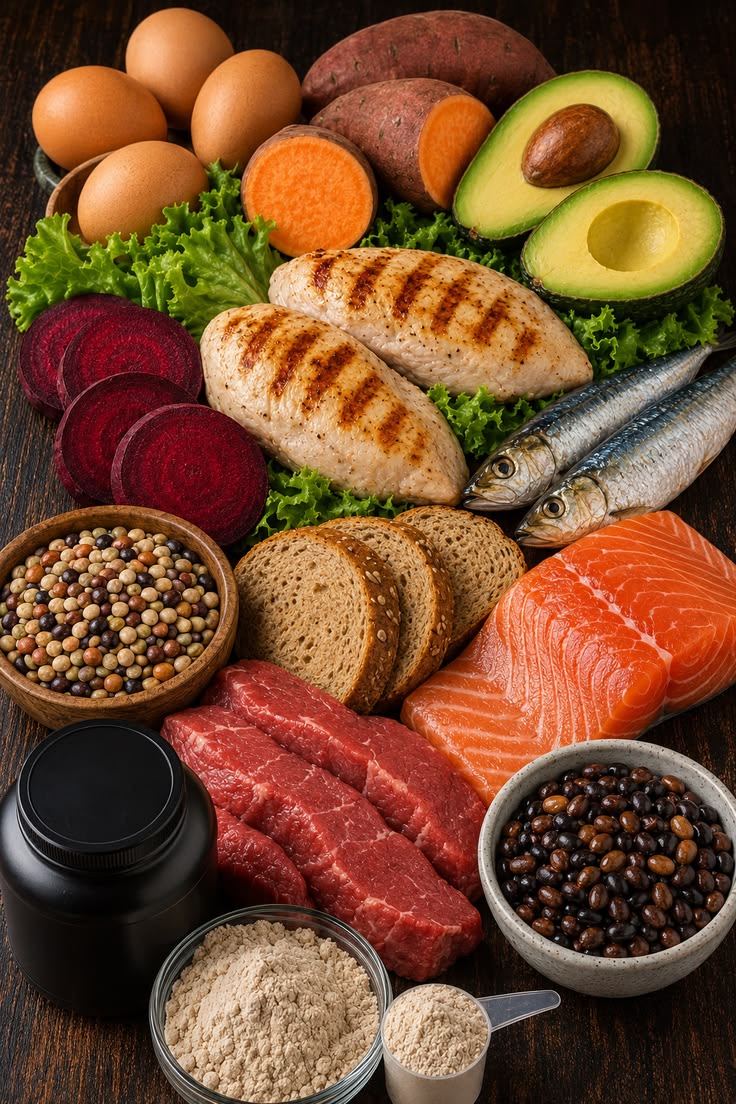
If you are eating adequate protein from food (eggs, fish, omena, beans, meat, dairy) and you cannot afford collagen supplements, you are not missing much. If joint pain or skin concerns are significant, see a doctor rather than treating it with sachets.
Biotin
Biotin is a B vitamin that plays a role in keratin production — the protein that makes up hair and nails. Biotin deficiency can cause hair loss and brittle nails. This is true and well-documented.
The gap between that fact and what the marketing implies is enormous. Biotin supplements will correct hair loss and brittle nails caused by biotin deficiency. They will do very little for hair loss caused by anything else — iron deficiency, thyroid disease, hormonal imbalance, stress, or genetics, which together account for the vast majority of hair loss in Kenyan women.
In Kenya, where iron deficiency affects over one-third of women of reproductive age, a woman experiencing hair loss is far more likely to have a ferritin problem than a biotin problem. A biotin supplement will not address that. An iron supplement — or better, iron-rich food — might.
There is also a practical clinical problem with high-dose biotin: it interferes with several laboratory tests, including thyroid function tests, cardiac biomarker tests, and hormone panels. A patient taking high-dose biotin and getting a thyroid test may get a falsely abnormal result. Tell your doctor if you are taking biotin supplements before any blood test.
Vitamin D
This is one of the supplements with genuinely strong evidence — and Kenya is not exempt from deficiency despite having abundant sunshine. Vitamin D is synthesised in the skin through sun exposure, but the amount produced depends on time of day, skin pigmentation, amount of skin exposed, and sunscreen use. People who work indoors, wear covering clothing, or live in urban settings with limited midday outdoor time may have lower levels than expected.
Vitamin D deficiency is linked to weakened immunity, poor bone density, and emerging evidence connects it to worse outcomes in diabetes and cardiovascular disease. If you are deficient — which requires a blood test to confirm — supplementation is well-evidenced and worthwhile.
The problem is that many Kenyans are buying Vitamin D supplements without knowing their levels, taking doses that are higher than needed, and sometimes combining them with other supplements that also contain vitamin D without realising it. Vitamin D is fat-soluble, which means excess amounts are stored in the body rather than excreted — and toxic levels cause nausea, kidney damage, and calcium dysregulation. It is one of the few vitamins where too much is a genuine risk.
Get your Vitamin D level tested before supplementing. If you are deficient, 1,000–2,000 IU daily is generally sufficient for most adults. You do not need high-dose supplements unless a doctor has confirmed significant deficiency.
Magnesium
Magnesium is involved in over 300 biochemical reactions in the body — muscle and nerve function, blood glucose regulation, blood pressure, and protein synthesis. Genuine deficiency is associated with muscle cramps, disrupted sleep, and elevated blood pressure. Supplementation in truly deficient people produces real improvements.
The caveats: not everyone who feels tired or has poor sleep is magnesium deficient. Magnesium is present in significant quantities in food — pumpkin seeds, omena, beans, lentils, dark leafy greens, whole grains. Most people eating a reasonably varied diet are getting adequate amounts. Supplementing on top of that produces minimal additional benefit.
If you are experiencing persistent muscle cramps, disrupted sleep, or high blood pressure, magnesium is worth discussing with a doctor — but in combination with a proper assessment, not as a substitute for one.
Weight-loss teas and "detox" products
No gentle way to say this: the evidence for commercial weight-loss teas is extremely weak, and the safety record of some products is not. Senna-based laxative teas — sold under wellness branding — work by irritating the gut lining to produce rapid bowel movements, which creates temporary weight reduction from fluid and stool loss. They do not reduce fat. They do not improve metabolism. Chronic use of senna causes dependence, electrolyte imbalances (which affect heart function), and long-term bowel dysfunction.
Products marketed as "detox" are based on a premise that has no physiological basis. Your liver and kidneys are your detox system. They work continuously and do not require assistance from a tea sachet. If your liver or kidneys are not functioning well enough to detox effectively, a tea will not fix that — you need a doctor.
Some products in this category have been found to contain undisclosed pharmaceutical ingredients, including diuretics and stimulants, which carry real cardiovascular risk. The PPB has issued warnings about specific products in this category. Check whether a product has PPB approval before buying anything sold primarily as a "fat burner" or "detox."
Iron supplements
This is the one supplement that a significant proportion of Kenyan women genuinely need and genuinely underuse. Iron deficiency affects over 37% of non-pregnant women and over 55% of pregnant women in Kenya. The gap between who needs iron and who is consistently taking it is large.
Iron from food (omena, beef liver, terere, beans) is the best source. When diet alone is insufficient or deficiency is already established, supplementation is appropriate and effective. The barrier is side effects — constipation, nausea, dark stools — which cause many people to stop. If side effects are severe, a lower-dose formulation taken more frequently, or a different form of iron (ferrous bisglycinate is typically gentler than ferrous sulphate), is worth discussing with a pharmacist or doctor.
Do not take high-dose iron without a blood test confirming deficiency. Excess iron cannot easily be excreted and causes organ damage over time.
Non-negotiable for women who are pregnant or planning to be. Folate is essential for neural tube development in early pregnancy — a period often before a woman knows she is pregnant. In Kenya, adequate folate intake from food alone is difficult, and neural tube defects remain a preventable cause of infant mortality and disability.
400–800 micrograms of folic acid daily, started at least one month before conception and continued through the first trimester, is the standard recommendation. This is evidence-backed, inexpensive, and available widely. Every woman of reproductive age who is sexually active should know this.
The bottom line
Before buying any supplement, ask three questions:
Do I actually have a deficiency? A blood test tells you. Most supplements are purchased based on symptoms that could have five different causes, only one of which is the deficiency the supplement addresses.
Is there evidence for this specific supplement for this specific condition? Not testimonials. Not influencer posts. Peer-reviewed clinical evidence. If you cannot find it, that is a signal.
Am I treating this supplement as a substitute for medical care? If you are taking a supplement instead of seeing a doctor about symptoms that need investigation, the supplement is not helping you — it is delaying you.
The supplement industry has built its business model on the legitimate desire to feel better and on a regulatory gap that allows it to promise things it cannot always deliver. In Kenya, where healthcare access is constrained and people are genuinely looking for affordable ways to manage their health, that gap is particularly exploitable.
Some supplements work. A few are essential for specific populations. Many are expensive placebos. Some are unsafe.
Knowing the difference is not anti-wellness. It is the most pro-health thing you can do — because money spent on a collagen sachet that does nothing is money that could have paid for the blood test that finds the actual problem.
→ What to do before buying any supplement:
Ask a pharmacist whether it is PPB-approved and what the evidence is
Consider whether a blood test would tell you whether you actually need it
Prioritise food sources first — most micronutrients are better absorbed from food than capsules
Tell your doctor about everything you are taking, including supplements, before any blood test or medical procedure