Why So Many Young Kenyans Are Mentally Exhausted in 2026
L
Leisure Collective
Author
227
0
0
Burnout, anxiety, and quiet breakdowns are spreading through Kenya's Gen Z and millennial population. It is not weakness — it is biology meeting a broken system. AfyaWatch254 breaks down what's really happening, and what your body is trying to tell you.
You passed your exams. You got the job or built the hustle. You are on time, you reply fast, you show up.
And yet, every morning, getting out of bed feels like a negotiation.
If you are a young Kenyan between the ages of 18 and 35, there is a very good chance you recognise this feeling. Not sadness, exactly. Not a crisis. Just a relentless, bone-deep exhaustion that no amount of sleep seems to fix.
This is burnout. And in Kenya in 2026, it is everywhere — even if the conversation hasn't caught up yet.
Over 60% of Kenya's population is under the age of 25. That is one of the youngest countries on earth — and one of the most economically pressured.
Mental disorders ranked as the second leading cause of disability among Kenyans aged 10–24, according to the Global Burden of Disease Study. Depression, anxiety, and conduct disorders account for the highest share of lost healthy years in that age group.
An estimated one in four Kenyans will experience a mental health condition at some point in their lives. The most common diagnoses in general hospital settings are depression, substance abuse, stress, and anxiety disorders.
Here is the part that stings: Kenya has only 0.19 psychiatrists per 100,000 people. That is not a typo. For a country of 55 million people, the mental health infrastructure is almost nonexistent.
But here is the twist that might surprise you.
Kenya Is Not As Broken As You Think — But The Cracks Are Widening
In early 2026, the Sapien Labs Global Mind Health Report — which analyzed nearly one million respondents across 84 countries — ranked Kenyan youth 3rd globally in mental wellbeing, with a Mind Health Quotient (MHQ) of 63. Strong spirituality, close family bonds, and lower consumption of ultra-processed foods were credited.
So we are not at rock bottom. That matters.
But the same report flagged the threats: early and excessive smartphone exposure, rising consumption of processed foods, and weakening family closeness are all chipping away at the very foundations that have kept young Kenyans resilient.
And then there are the structural pressures that no wellness trend can fully absorb.
What Is Actually Draining Young Kenyans
1. The Economy of Endless Hustle Youth unemployment in Kenya remains brutally high. Those who are employed often work multiple gigs, in jobs that don't match their qualifications, under contracts with no benefits, no security, and no future path. The pressure to "make it" — to build something from nothing — is relentless and largely unsupported.
2. Social Media Performance Exhaustion The algorithm rewards consistency. But being "on" constantly — curating your life, managing your brand, performing wellness while actually struggling — is cognitively and emotionally expensive. Social media has turned ordinary people into content machines, and the body keeps score.
3. The Cost of Living Crisis Rent in Nairobi. Transport. Unga. The SHA confusion. Every month, more young Kenyans are doing maths that doesn't add up. Financial stress is one of the most potent drivers of chronic anxiety and cortisol dysregulation — which means your stress isn't just in your head. It is in your body.
4. Therapy Stigma Mental illness is still widely understood in many Kenyan communities as spiritual failure, personal weakness, or "a white people thing." This means most people who are struggling never seek help — not because they don't want to, but because they have been taught their pain is shameful.
This is where it gets important, because burnout is not just a mood. It is a physiological state.
When you are under chronic stress, your body produces cortisol — the stress hormone. In short bursts, cortisol is useful. It keeps you alert and helps you perform. But when stress is constant and cortisol never drops, your system starts to break down:
Sleep becomes non-restorative — you sleep but don't recover
Inflammation rises — linked to everything from skin flare-ups to gut problems to heart disease
Immune function drops — you get sick more often, take longer to heal
Concentration fragments — it becomes harder to focus, remember, or make decisions
Emotional regulation suffers — small things feel overwhelming; big things feel numbing
This is not weakness. This is your nervous system screaming that it has been in overdrive for too long.
The 2026 Shift: Nervous System Care Is The New Wellness
Globally, the biggest wellness trend of 2026 is not a supplement or a gym routine. It is nervous system regulation — the practice of intentionally bringing your body out of chronic stress response and into a state of safety and rest.
Terms like "vagal tone," "somatic experiencing," and "polyvagal theory" have moved from therapy rooms into everyday vocabulary. And here is why that matters for Kenya: most of the most effective techniques are free.
What nervous system regulation looks like in practice:
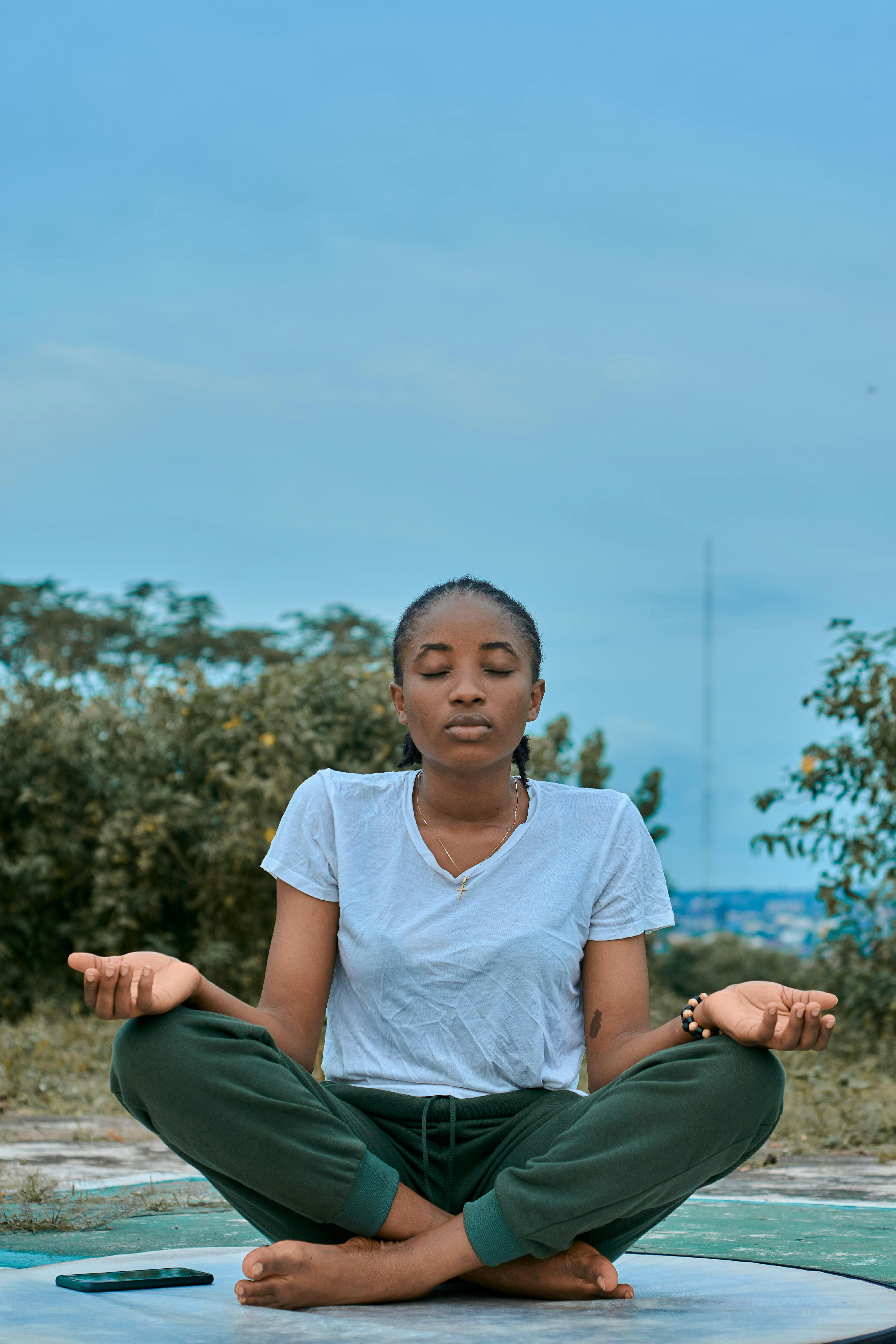
Extended exhale breathing — your exhale activates the parasympathetic nervous system (the "rest and digest" state). Try breathing in for 4 counts, out for 8. Do it for five minutes. That is not a metaphor — that is physiology.
Somatic movement — shaking, stretching, walking, or dancing are ways the body releases stored stress. Animals in the wild shake after a predator encounter. We have been taught to suppress that. It has a cost.
Cold water exposure — a cold shower in the morning is not just a productivity hack. It trains your vagus nerve — the nerve that governs your stress response — to regulate more efficiently over time.
Social connection (real, not digital) — eye contact, genuine conversation, physical proximity to safe people. These are among the most powerful regulators of the nervous system. The loneliness epidemic is a nervous system crisis.
Nature time — studies consistently show that time in green or natural spaces reduces cortisol levels measurably. Kenya is extraordinarily rich in this resource.
The conversation is starting. Somatic Experiencing Kenya — a trauma and nervous system healing practice — launched in-person practitioner training in Nairobi in 2025, running through 2026. Yoga studios, breathwork facilitators, and somatic practitioners are growing across the city.
This is not yet accessible to everyone. Most of these services are priced for a specific income bracket. That is a gap AfyaWatch254 will keep pushing on.
But awareness is the first step. And more young Kenyans are beginning to name what they feel — not as failure, but as a body doing exactly what bodies do under too much pressure for too long.
What You Can Do — Starting Now
You do not need a therapist, a wellness retreat, or expensive supplements to begin healing your nervous system. You need consistency with small things:
Set a phone-down time — minimum one hour before bed, every day
Breathe with intention — 5 minutes of extended exhale breathing, morning or evening
Move your body daily — not to lose weight. To release. A 20-minute walk counts.
Name your emotions — not to dramatise them, but to process them. Journaling works. Talking to a trusted person works.
Protect your sleep — your nervous system rebuilds at night. This is non-negotiable.
If you can access a therapist — the Kenya Counselling and Psychological Association (KCPA) maintains a directory of registered practitioners: kcpa.or.ke
AfyaWatch254 Says: Exhaustion Is Not A Personality Trait
The culture of "grind or die" is not ambition. It is a trauma response dressed up as productivity.
You are not lazy for being tired. You are not weak for struggling. You are a young person navigating real economic, social, and emotional pressures in a country that has not yet built the systems to support you.
Your body is not broken. It is communicating. The question is whether you will listen.