The Diseases Quietly Killing More Kenyans Than Infections — And Most Don't Know They Have Them
L
Leisure Collective
Author
278
0
0
While Kenya fights malaria and HIV, a silent epidemic of hypertension, diabetes, and kidney disease is spreading — largely undetected, often untreated.
There is a health crisis spreading through Kenya right now that has no dramatic outbreak, no contact tracing, and no government emergency response.
It does not kill fast. It kills slowly, silently, and inside the very body you walk around in every day — often for years before you feel a thing.
We are talking about non-communicable diseases: hypertension, diabetes, chronic kidney disease, and cardiovascular disease. And according to the data, they are now responsible for over 50% of all hospital admissions and deaths in Kenya.
This is not a story about other people. If you are a Kenyan adult, statistically, you have a better than even chance of already living with at least one of these conditions — and not knowing it.
A comprehensive modelling study estimates that 51% of Kenyan adults currently live with at least one non-communicable disease (NCD). More than half the adult population. One in two.
The biggest driver? Hypertension — affecting an estimated 5.3 million Kenyan adults, with that number projected to nearly double to over 10 million by 2035. An estimated 20.5% of Kenyan adults have hypertension right now. Most of them do not know.
Diabetes affects approximately 3.3% of Kenyans according to the Ministry of Health — but that figure is likely a significant undercount due to limited screening. In Kibera, Nairobi's largest informal settlement, diabetes prevalence sits at 5.3% — already higher than the national average, in a community with the least access to treatment.
Chronic kidney disease (CKD) is on track to affect 2.1 million Kenyans between 2018 and 2035. The Ministry of Health has cited 3.1 million Kenyans currently living with the condition.
NCDs now account for a third of Kenya's total disease burden, and cardiovascular diseases — heart attacks, stroke, hypertension complications — are the leading cause of NCD-related death. Cancers follow, then chronic lung diseases, then diabetes complications.
High blood pressure has no symptoms. Many people walk around with it for years — feeling completely fine — until a stroke, a heart attack, or a kidney failure event tells them something has been wrong for a long time.
This is why hypertension is called the "silent killer." Not because it is rare. Because it gives you no warning.
Screening is not routine.
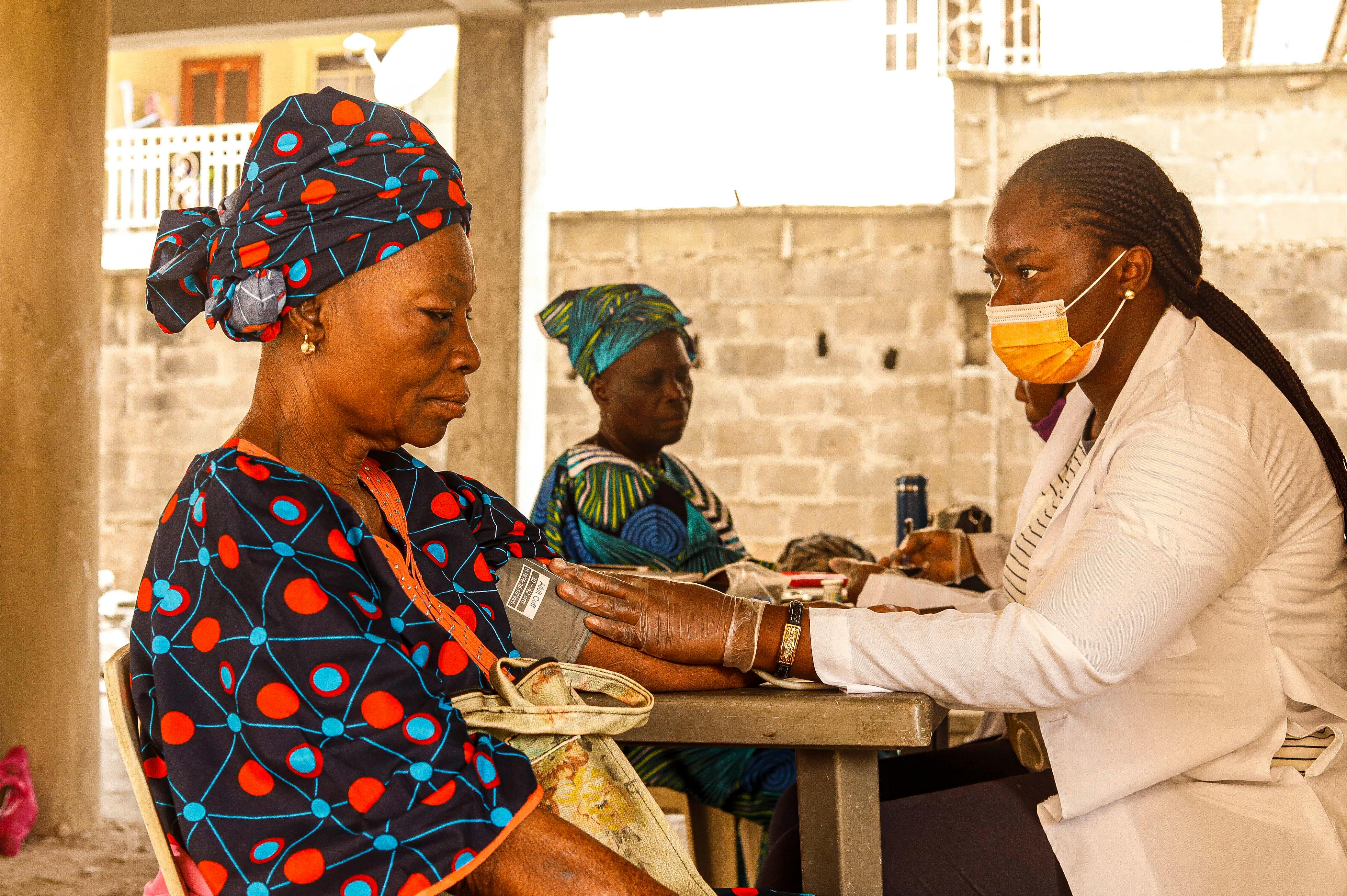
In Kenya, most people only get their blood pressure checked when they visit a clinic for something else. Diabetes screening is even less common outside maternal health programmes. This means the majority of people with these conditions go undetected, unmonitored, and untreated — often until the damage is already severe.
The health system is not built for them.
Kenya's health infrastructure was built around infectious diseases — malaria, HIV, TB, cholera. The response to the NCD surge has been slow, underfunded, and concentrated in urban, higher-tier facilities. The SHA benefit package includes chronic disease management, but as AfyaWatch254 has documented, reimbursement gaps and underfunding continue to limit access in practice.
Diet and lifestyle have changed faster than awareness.
Urbanisation has driven a rapid shift toward ultra-processed foods, sedentary jobs, increased alcohol consumption, and reduced physical activity. The risk factors for NCDs — poor diet, inactivity, smoking, alcohol — are now deeply embedded in the daily lives of millions of Kenyans, particularly in cities.
Who Is Most At Risk?
Everyone should care about NCDs. But certain groups face higher risk:
Urban residents: City life correlates with sedentary work, processed food, higher stress, and less physical activity.
Women aged 30–49: According to the 2022 Kenya Demographic and Health Survey, 8.7% of Kenyan women of reproductive age have hypertension — the most prevalent NCD in that group. Arthritis (2.9%) and depression (2.8%) follow. Increasing age, higher income, and obesity are all independently linked to higher NCD burden in women.
People with HIV: Those living with HIV have a significantly elevated NCD burden — driven partly by the disease itself and partly by long-term antiretroviral therapy. An estimated 62% of Kenyan adults living with HIV have at least one NCD.
Anyone who has been "too busy to check": If you have not had your blood pressure checked in the last year, you do not know your risk. That is the most dangerous position to be in.
The Warning Signs You Should Not Ignore
Even though many NCDs are silent in early stages, there are signals that something is wrong. Do not dismiss these:
For hypertension:
Persistent headaches, especially at the back of the head on waking
Blurred vision or visual disturbances
Nosebleeds without obvious cause
Shortness of breath during mild activity
Chest tightness or palpitations
For diabetes:
Increased thirst and frequent urination
Unexplained fatigue or blurred vision
Slow-healing wounds or recurring infections
Tingling or numbness in hands or feet
For kidney disease:
Swelling in legs, ankles, or feet
Foamy or discoloured urine
Fatigue that doesn't improve with rest
Lower back pain not linked to injury
If you experience any of these regularly — get tested. Not next month. This week.
What Prevention Actually Looks Like
The good news about NCDs is also the frustrating news: most of them are largely preventable — and manageable if caught early. The interventions are not complicated. They are just not being done consistently enough.
1. Know your numbers. Blood pressure: below 120/80 is normal. Above 130/80 is elevated. Above 140/90 is high. Get it checked at any pharmacy or health facility. It takes two minutes. Blood sugar: a fasting blood glucose above 7.0 mmol/L indicates diabetes. Get tested. Cholesterol: ideally checked every 3–5 years from age 25 onwards, more frequently if you have risk factors.
2. Move — consistently, not intensely. You do not need a gym membership. Thirty minutes of brisk walking five days a week measurably reduces blood pressure, improves insulin sensitivity, and protects cardiovascular health. This is not motivation content. It is clinical evidence.
3. Eat less salt, more whole food. Salt is the primary dietary driver of hypertension. The average Kenyan diet — especially in urban areas — is heavily salted. Reduce processed foods, canned goods, and adding salt at the table. Increase vegetables, legumes, and whole grains. Sukuma wiki, cowpeas, sweet potato – these are not poor people's food. They are cardiovascular protection.
4. Limit alcohol. Alcohol raises blood pressure, damages the liver and kidneys, and contributes to weight gain and blood sugar dysregulation. In Kenya, alcohol consumption has been rising — particularly among young men. This is not a moral point. It is a physiological one.
5. Do not smoke. Smoking is the most modifiable risk factor for cardiovascular disease. In combination with hypertension or diabetes, it dramatically accelerates organ damage.
6. Attend your SHA-covered health screenings. Under the SHA framework, primary healthcare visits include basic chronic disease screening. Use them. Take your family members. Make it a habit.
The Watchdog Angle: Why Is Kenya Not Screening More People?
Here is what AfyaWatch254 wants to name directly: Kenya knows it has an NCD crisis. The data has been there for years. The Ministry of Health has NCDs in its strategic plans. And yet:
Mass community screening programmes remain sporadic and underfunded
NCD medications are frequently out of stock at public facilities
SHA reimbursements for chronic disease management lag, creating supply gaps
Public awareness campaigns on NCDs receive a fraction of the attention given to infectious disease outbreaks
A person dying slowly of undiagnosed hypertension is not a newsworthy event. There is no outbreak, no emergency, no dramatic response. Just a quiet death that could have been prevented with a two-minute blood pressure check.
That invisibility is a policy failure. We will keep saying it.
AfyaWatch254 Says: Get Tested. Today.
You cannot manage what you do not know about. And the diseases that kill the most Kenyans are not the dramatic ones — they are the quiet ones, building silently in bodies whose owners were too busy, too healthy-feeling, or too afraid to look.
Get your blood pressure checked. Get your blood sugar tested. Know your cholesterol. Then take whatever small step comes next.
Because the most dangerous thing about these diseases is not that they are incurable. It is that most people don't know they have them until it is very late.
Where to get screened in Kenya:
Any public health centre or Level 3 hospital offers basic BP and blood sugar checks under SHA
Many pharmacies (Goodlife, Haltons, Medisel) offer free or low-cost blood pressure screening
Kenya Diabetes Management & Information Centre (DMAC): +254 20 2712994
Kenya Cardiac Society (cardiovascular risk information):kenyacardiac.org